Started as a Research Assistant in AI Companion at University of Southern California, working with Prof. Angel Hsing-Chi Hwang.
Jul 08
 Research Assistant at University of Southern California
 M.A. in Journalism and Communication, Wuhan University
I am currently a Research Assistant with the USC Annenberg School for Communication and Journalism. My research focuses on AI trust, psychological communication, and human–AI interaction, examining how emerging technologies shape human behavior, media trust, and technology-mediated communication.
I hold both a Bachelor’s degree and a Master of Arts degree from the School of Journalism and Communication at Wuhan University. Previously, I worked as a remote Research Assistant at Tsinghua University and Nanyang Technological University. My professional experiences at China Media Group, Meituan, and Blue Focus Digital have strengthened my skills in research, data analysis, and digital communication.
I am currently seeking Ph.D. opportunities to advance research on AI-driven communication, online safety, and the societal implications of emerging technologies. I welcome opportunities for collaboration and scholarly discussion in these areas.






arXiv: 2606.01228
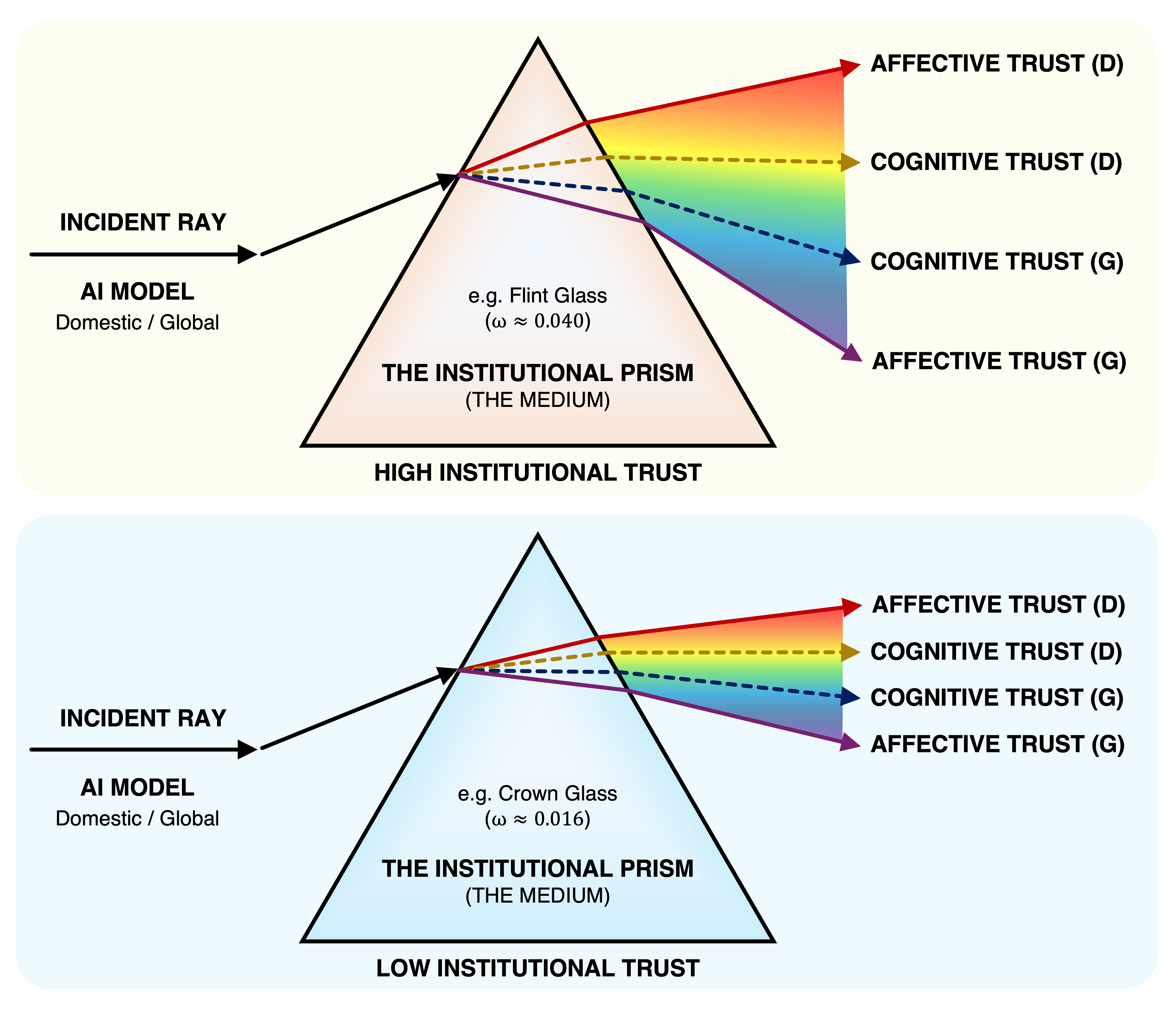
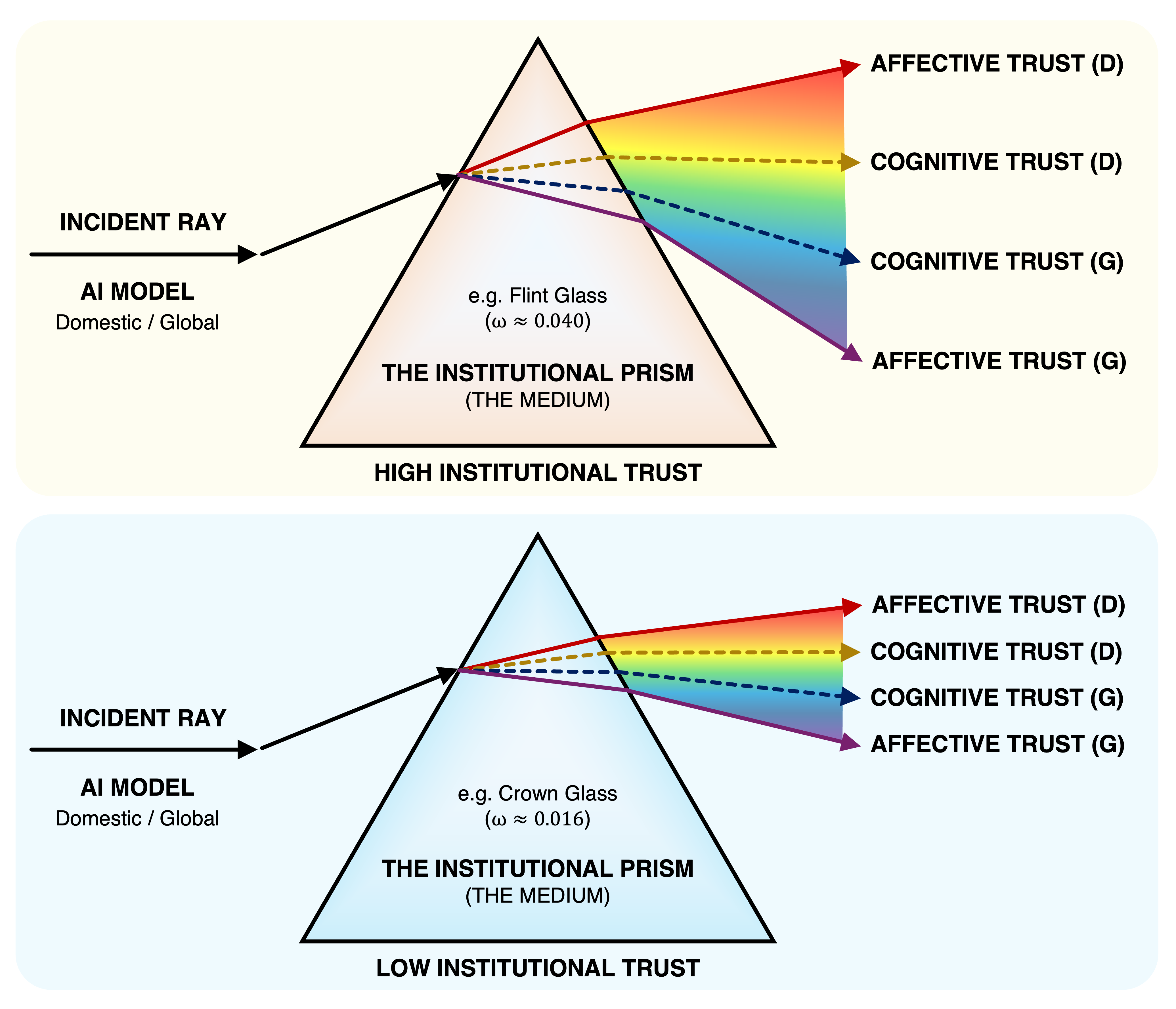
Public trust in generative artificial intelligence has become increasingly differentiated in China with the rise of domestic large language models. While existing research has largely focused on technical performance and individual factors, less attention has been paid to the broader institutional contexts that shape AI trust. Drawing on Cognitive-Affective Trust Theory, we propose an Institutional Prism framework to demonstrate how institutional trust shapes user trust in domestic (DeepSeek) and global (ChatGPT) large language models. Based on a within-subject survey of 405 Chinese users, the findings show that higher institutional trust is associated with stronger affective trust in domestic AI models and more favorable cognitive evaluations. This domestic advantage weakens among users with lower institutional trust. These findings identify institutional trust as a critical mechanism in AI-mediated communication. By linking micro-level psychological judgments with macro-level governance, this study contributes a new perspective on human-machine communication in contemporary China.
2026 Association for Education in Journalism and Mass Communication Annual Conference (AEJMC)
Why do people trust some AI systems more than others? This study examines how institutional trust shapes perceptions of domestic and global AI. It shows that trust depends not only on performance, but also on governance contexts. Higher institutional trust strengthens emotional connections to domestic AI and shifts evaluations in its favor, highlighting how social environments shape trust in emerging technologies.
SSRN: 6856879
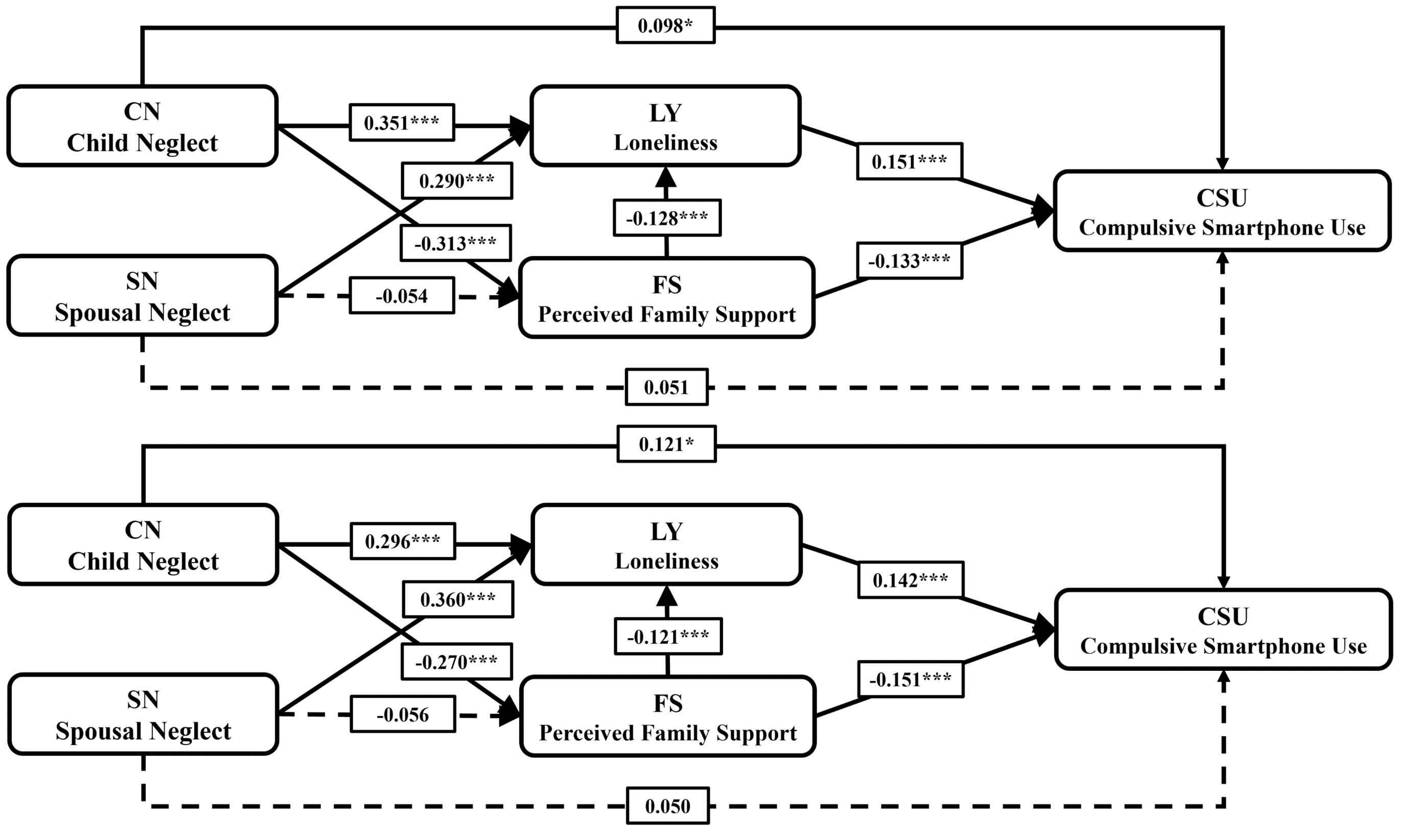
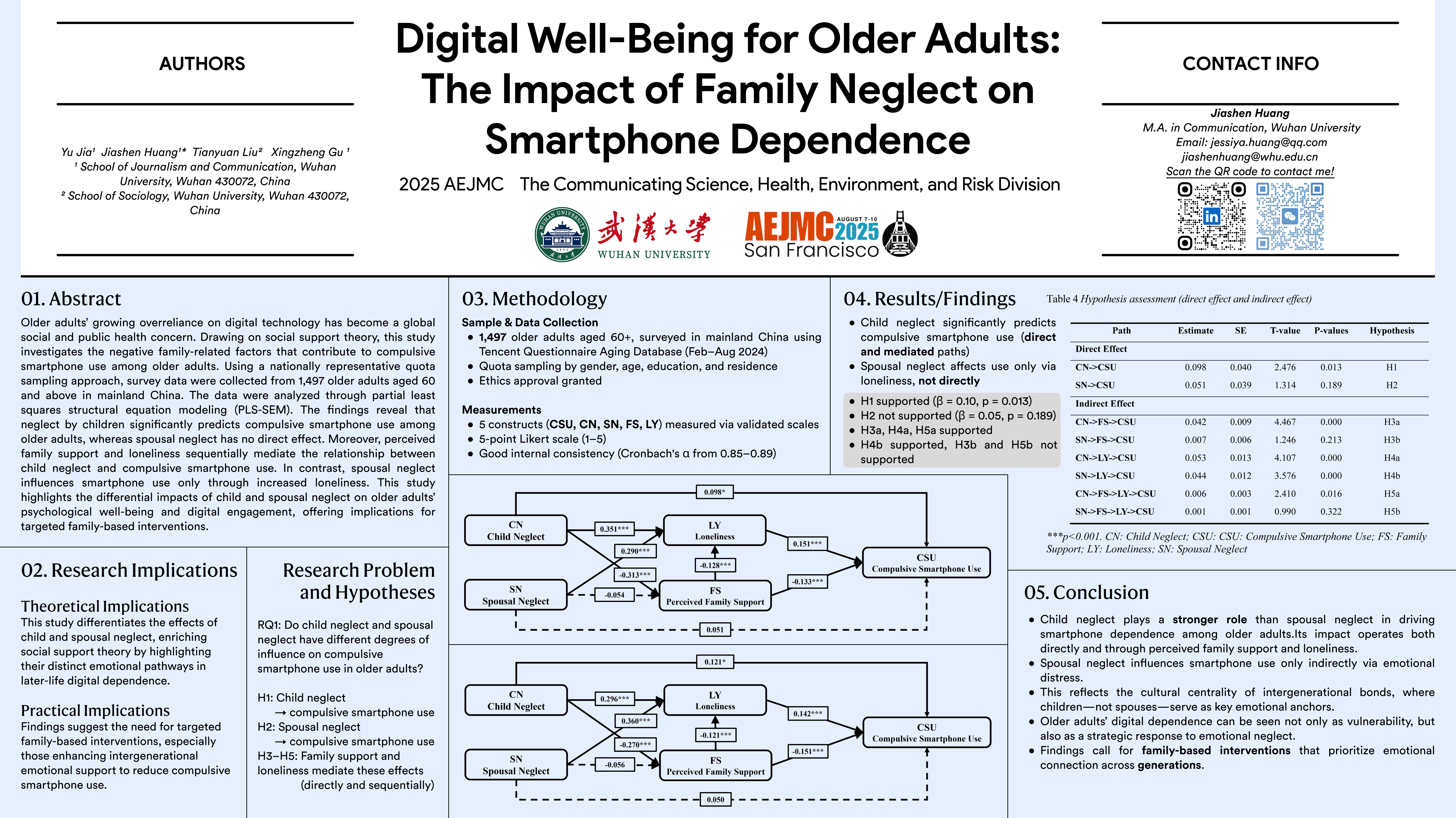
Older adults' growing overreliance on digital technology has become a global social and public health concern. Drawing on social support theory, this study investigates the negative family-related factors that contribute to compulsive smartphone use among older adults. Using a nationally representative quota sampling approach, survey data were collected from 1,497 older adults aged 60 and above in mainland China. The data were analyzed through partial least squares structural equation modeling (PLS-SEM). The findings reveal that neglect by children significantly predicts compulsive smartphone use among older adults, whereas spousal neglect has no direct effect. Moreover, perceived family support and loneliness sequentially mediate the relationship between child neglect and compulsive smartphone use. In contrast, spousal neglect influences smartphone use only through increased loneliness. This study highlights the differential impacts of child and spousal neglect on older adults' psychological well-being and digital engagement, offering implications for targeted family-based interventions.
2025 Association for Education in Journalism and Mass Communication Annual Conference (AEJMC)
The excessive reliance and addiction of older adults to digital technology are increasingly evolving into a global social and public health challenge. Grounded in social support theory, this study investigates the negative family factors that contribute to compulsive smartphone use among older adults. Using a nationally representative quota sampling approach, we collected survey data from 1,497 older adults aged 60 and above in mainland China. The data were analyzed through partial least squares structural equation modeling (PLS-SEM). The findings reveal that child neglect significantly fosters compulsive smartphone use among older adults, whereas partner neglect has no direct effect. Moreover, perceived family support and loneliness mediate the relationship between child neglect and compulsive smartphone use, with a sequential mediation effect observed between them. In contrast, partner neglect influences compulsive smartphone use only through increased loneliness. This study highlights the differential impacts of child neglect and partner neglect on older adults’ psychological well-being and digital consumption habits, providing theoretical and empirical support for developing targeted intervention strategies.
2024 National Communication Association 110th Annual Convention (NCA)
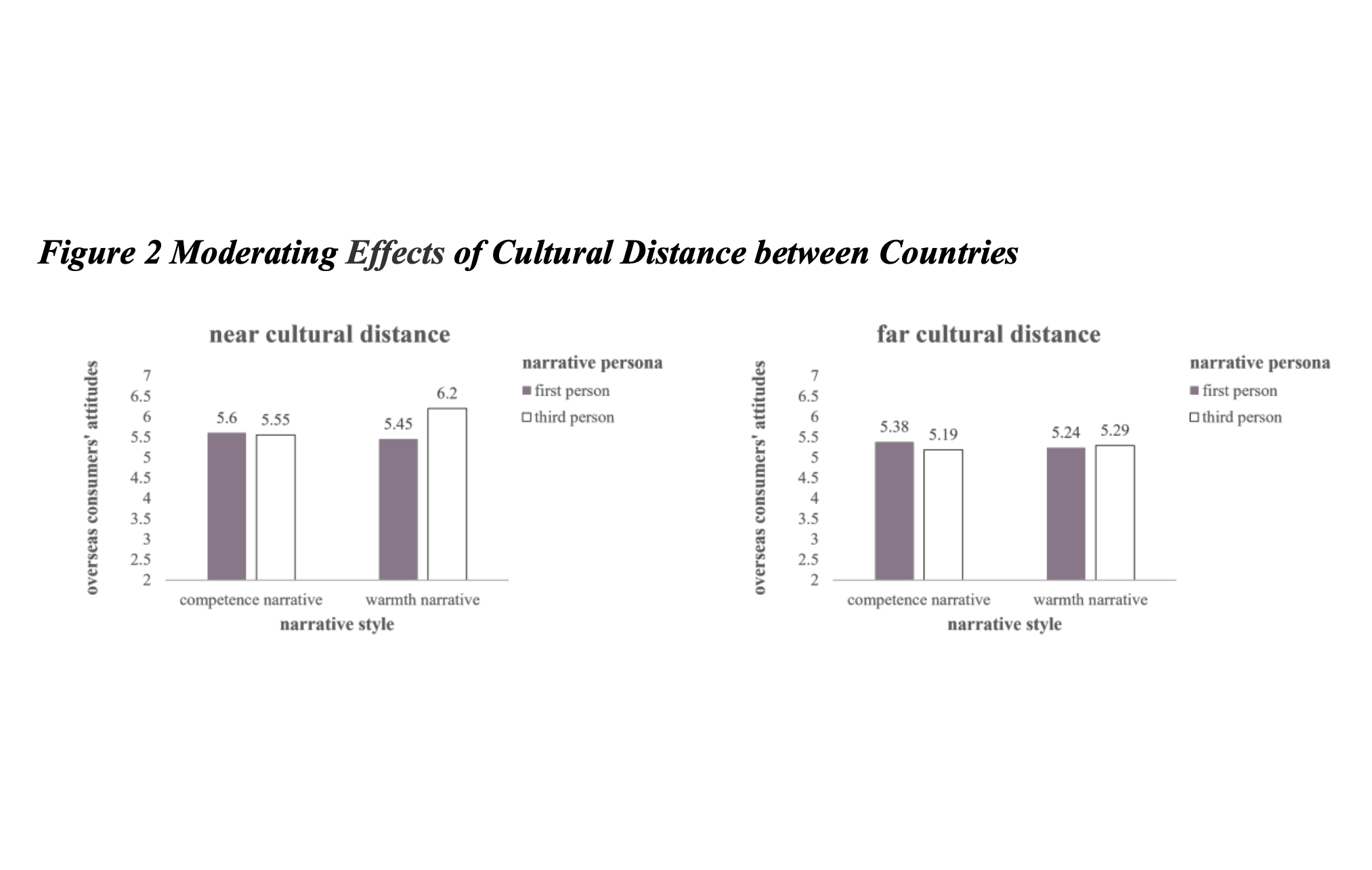
The international communication of brand has become an important issue in international trade. In this context, this paper chooses two important communication variables, brand narrative style and narrative person, to discuss the matching effect between brand narrative style (warmth vs. ability) and narrative person (first-person vs. third-person) and its impact on overseas audiences. In this paper, the main effect research based on big data crawling, laboratory experiment research on mediating effect and cross-cultural experimental research on regulating effect are carried out respectively. It is found that the interaction between brand narrative style and narrative person has a significant impact on consumer brand attitude. As for the warm brand narrative, compared with the third-person, the first-person narrative is helpful to improve consumers' brand attitude; For competency-based brand narrative, compared with the first-person, the third-person narrative is helpful to improve consumers' brand attitude. Information processing fluency has a mediating effect on the process. The interactive impact of brand narrative style and narrative person on overseas consumers' brand attitudes is moderated by the cultural distance between the home country and the host country. This matching effect is more significant for overseas consumers with close cultural distance, while it is less significant for overseas consumers with far cultural distance.
Journal of Theoretical and Applied Electronic Commerce Research (JTAER)
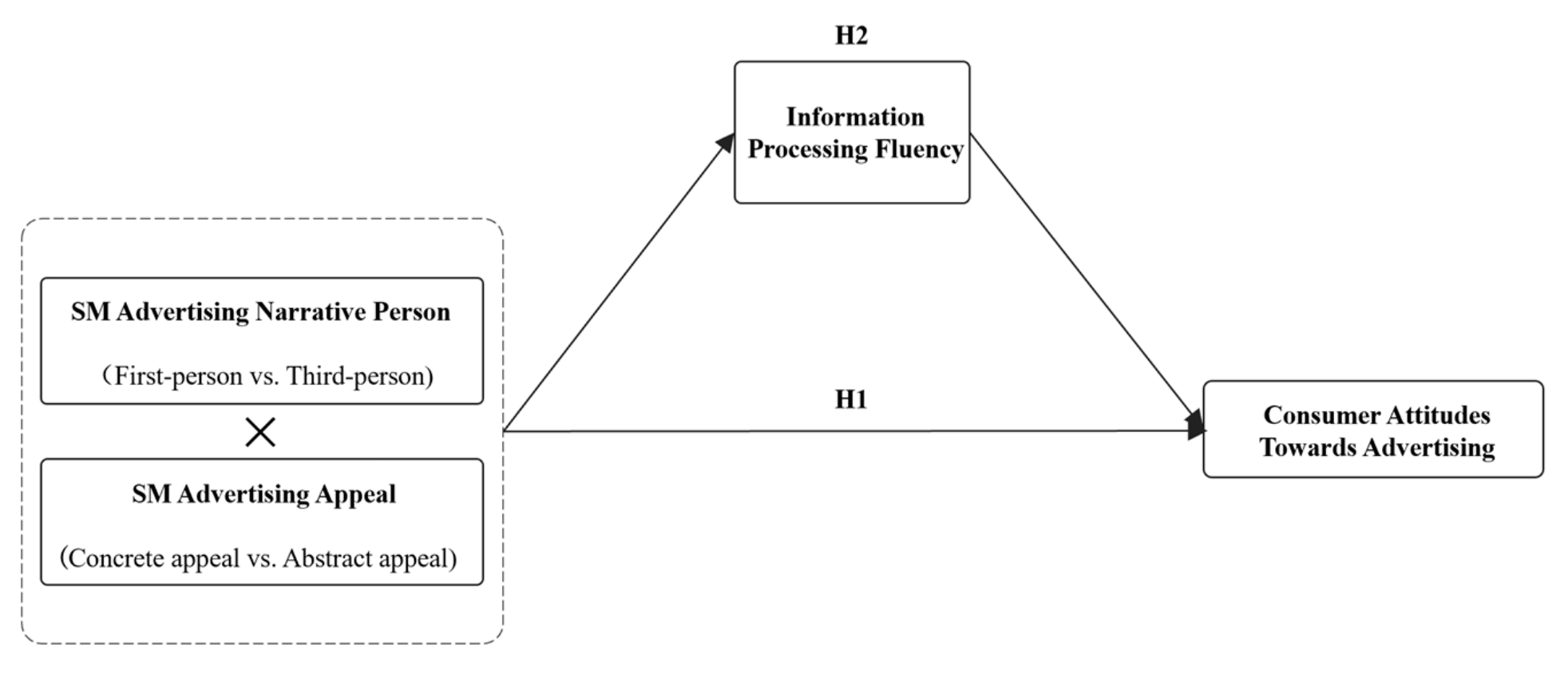
The burgeoning landscape of social media advertising also faces a myriad of challenges. This study aims to explore the interactive effect of advertising appeal (abstract vs. concrete) and narrative person (first-person vs. third-person) on consumer attitudes towards social media advertising. Based on the construal level theory, this study uses secondary data and two experiments to investigate the interactive effect between advertising appeal and narrative person in social media advertising and the moderated mediating role of information processing fluency. The result reveals that a harmonious match between advertising appeal and narrative person enhances consumer fluency in processing advertising information, thereby improving consumer attitudes towards advertising. Specifically, for advertisements with concrete appeal, first-person narratives are more conducive to enhancing consumer attitudes towards advertising. Conversely, for advertisements with abstract appeal, third-person narratives are more advantageous. This study provides theoretical insights into social media advertising narration, with practical implications for marketers to advance social media advertising design.
2024年中国新闻史学会健康传播委员会年会
2024 Annual Meeting of the Health Communication Professional Committee of the Chinese Society for the History of Journalism
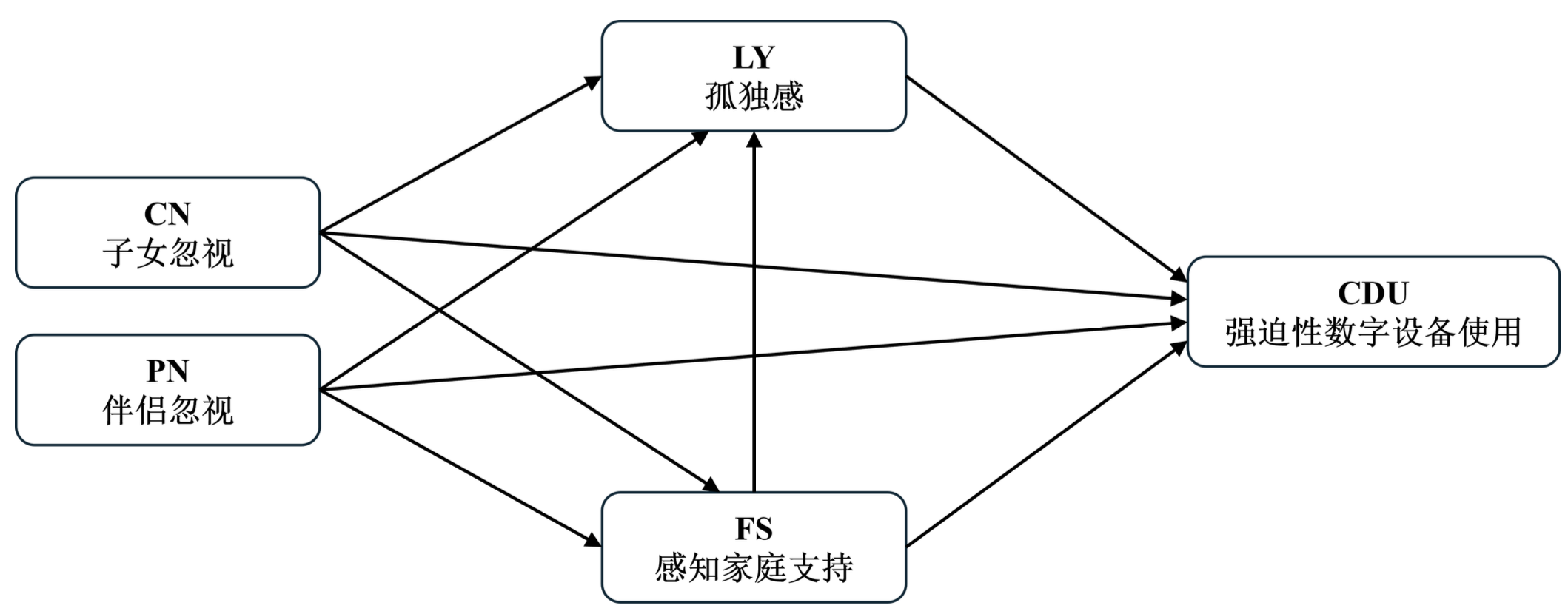
The excessive reliance on and addiction to digital technology among older adults is gradually evolving into a global social and public health challenge. Based on social support theory, this study delves into the family factors inducing compulsive digital device use among older adults. Through national quota sampling, survey data from 1497 older adults aged 60 and above in mainland China were ultimately collected, and the questionnaire data were analyzed using partial least squares structural equation modeling (PLS-SEM). The research results indicate that children's neglect of older adults significantly promotes compulsive digital device use among older adults, while spousal neglect has no direct impact on this behavior. Furthermore, family support and loneliness play independent mediating and sequential mediating roles between children's neglect and compulsive digital device use among older adults. Spousal neglect can only affect compulsive digital device use among older adults by increasing their loneliness. This study reveals the different impacts of children's neglect and spousal neglect on the mental health and digital usage habits of older adults, providing theoretical support and empirical evidence for developing stratified and categorized intervention measures.

2024年互动营销国际研讨会
2024 International Symposium and Workshop of Interactive Marketing
The excessive reliance on and addiction to digital technology among older adults is gradually evolving into a global social and public health challenge. Based on social support theory, this study delves into the family factors inducing compulsive digital device use among older adults. Through national quota sampling, survey data from 1497 older adults aged 60 and above in mainland China were ultimately collected, and the questionnaire data were analyzed using partial least squares structural equation modeling (PLS-SEM). The research results indicate that children's neglect of older adults significantly promotes compulsive digital device use among older adults, while spousal neglect has no direct impact on this behavior. Furthermore, family support and loneliness play independent mediating and sequential mediating roles between children's neglect and compulsive digital device use among older adults. Spousal neglect can only affect compulsive digital device use among older adults by increasing their loneliness. This study reveals the different impacts of children's neglect and spousal neglect on the mental health and digital usage habits of older adults, providing theoretical support and empirical evidence for developing stratified and categorized intervention measures.