Institutional Trust and the Domestic AI Advantage: Evidence from DeepSeek and ChatGPT Users in China
arXiv: 2606.01228
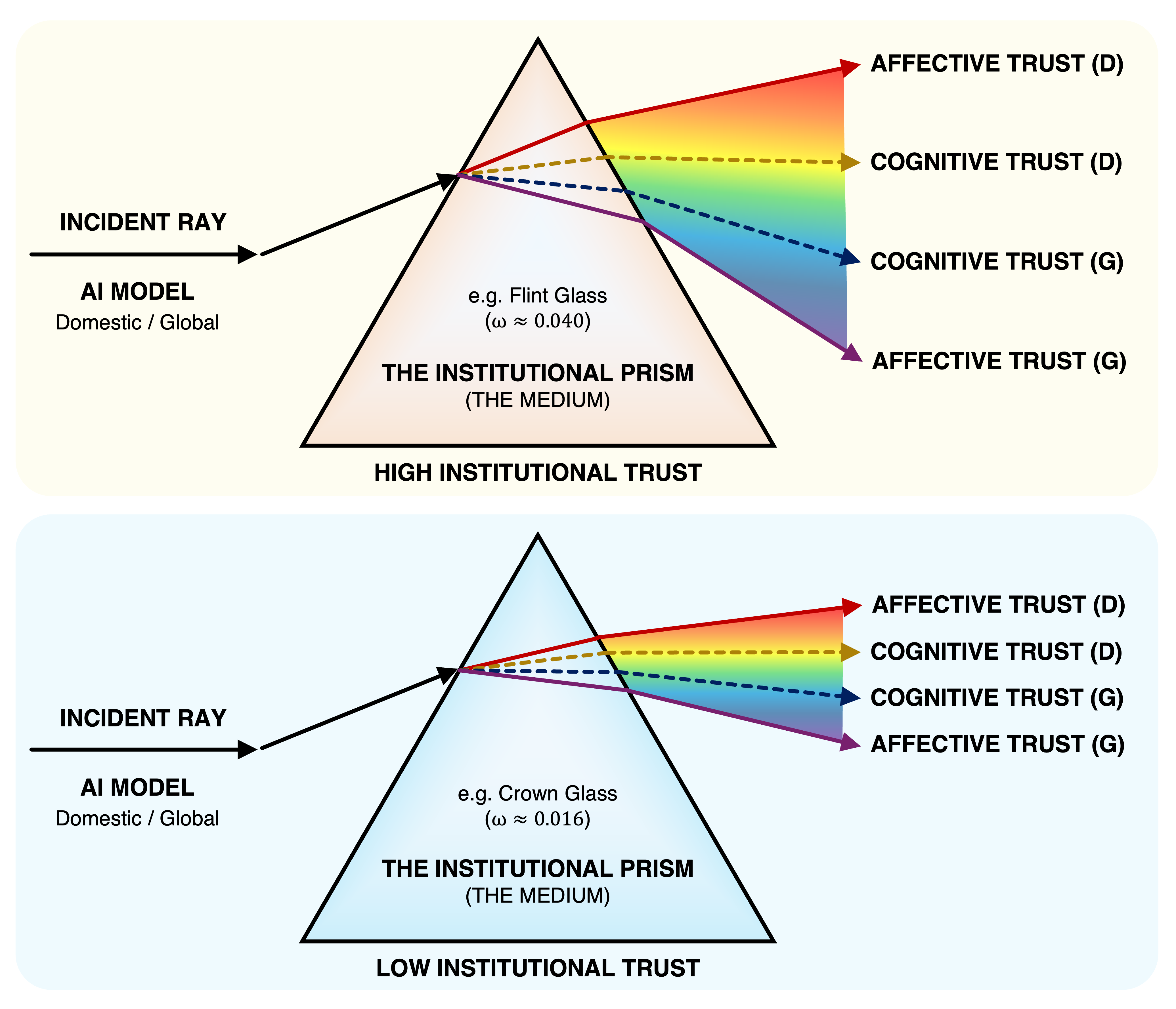
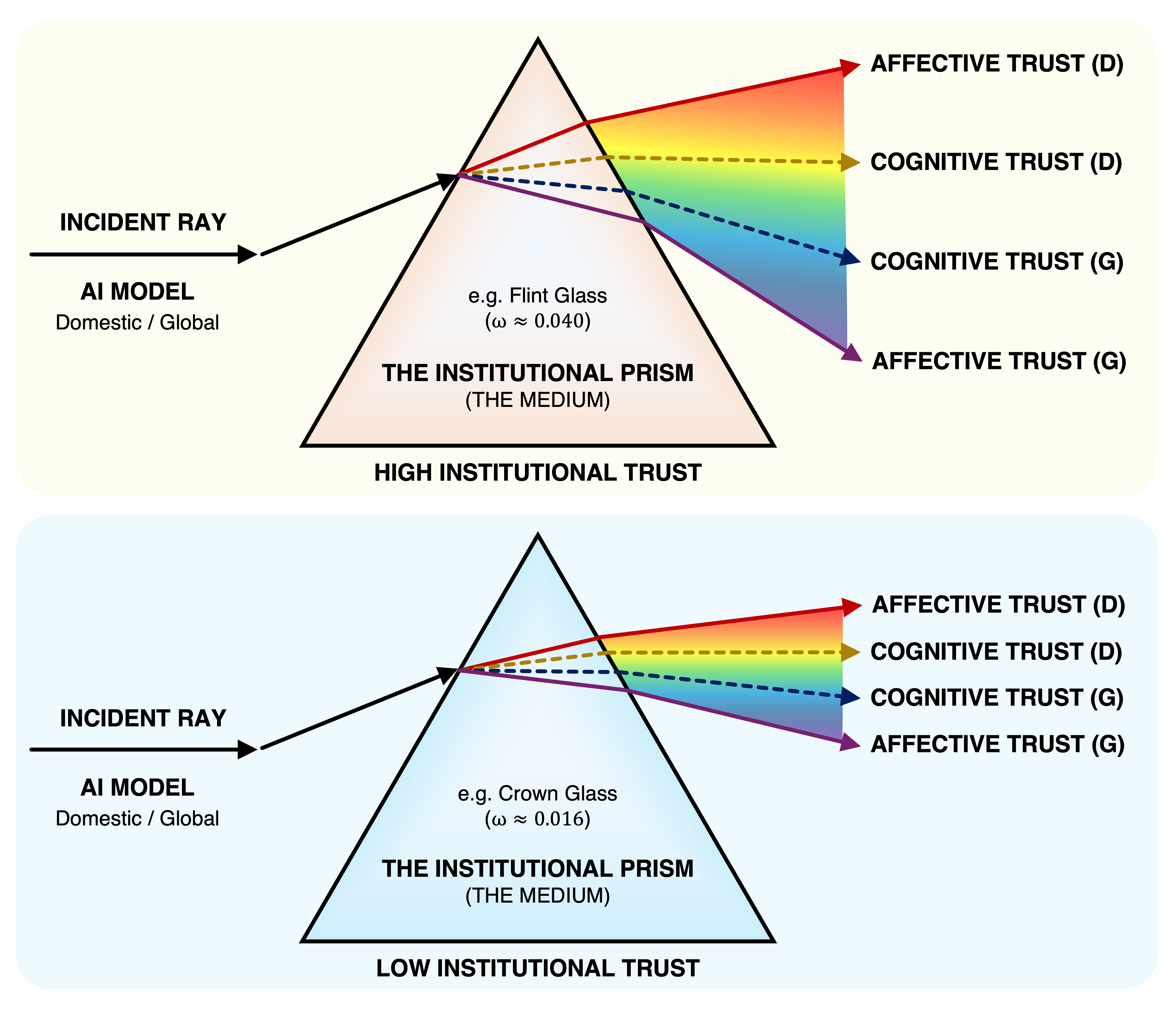
Public trust in generative artificial intelligence has become increasingly differentiated in China with the rise of domestic large language models. While existing research has largely focused on technical performance and individual factors, less attention has been paid to the broader institutional contexts that shape AI trust. Drawing on Cognitive-Affective Trust Theory, we propose an Institutional Prism framework to demonstrate how institutional trust shapes user trust in domestic (DeepSeek) and global (ChatGPT) large language models. Based on a within-subject survey of 405 Chinese users, the findings show that higher institutional trust is associated with stronger affective trust in domestic AI models and more favorable cognitive evaluations. This domestic advantage weakens among users with lower institutional trust. These findings identify institutional trust as a critical mechanism in AI-mediated communication. By linking micro-level psychological judgments with macro-level governance, this study contributes a new perspective on human-machine communication in contemporary China.